The Man Behind Your Reactions: How Your Father's Voice Still Lives in Your Head

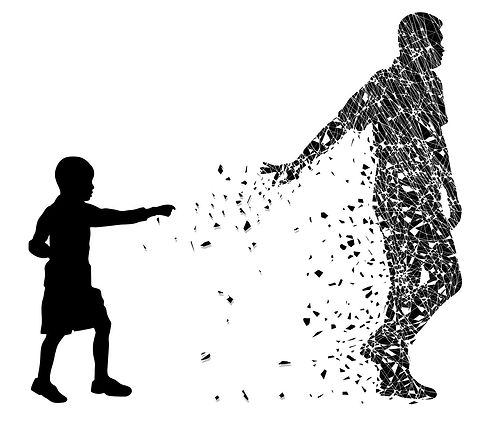
The father wound doesn't announce itself. It shows up in how you respond to criticism, why you can't accept love easily, and what you believe — deep down — about whether you're enough.
You're in a meeting and your boss questions your decision. Your chest tightens. Something flashes — not just frustration, but something older, heavier. You brush it off. But it stays.
Your wife says, "I just want you to talk to me," and instead of feeling connected, you feel accused. You shut down. You don't know why.
You've worked your whole adult life to become a certain kind of man. And still, in quiet moments, there's a voice that says: Not enough. Prove it. Don't show weakness.
That voice didn't originate in your career. It didn't start with your marriage. For most men, it started with their father.
What the Father Wound Actually Is
The father wound is not a clinical diagnosis. It's a term used in counseling and psychology to describe the emotional and relational damage — often invisible to the man carrying it — that comes from an absent, emotionally unavailable, critical, or unpredictable father.
It doesn't require a dramatic backstory. Your father may have been present in the house and still emotionally unavailable. He may have worked hard, stayed faithful, and never raised his hand — and still withheld the one thing you needed most: an honest, unhurried message that you were seen and that you had what it takes.
Research published in Psychology of Men & Masculinities found that men raised in paternally deprived homes were significantly more likely to report gender role conflict, difficulties with emotional expression, and challenges in their own father-child relationships as adults. The pattern doesn't just stop with the man who experienced it. It tends to repeat.
John Eldredge, in Wild at Heart, describes the wound this way: "Every boy, in his journey to become a man, takes an arrow in the center of his heart, in the place of his strength. Because the wound is rarely discussed and even more rarely healed, every man carries a wound. And the wound is nearly always given by his father."
How It Shows Up in Your Life Today
Father wounds don't look like wounds to the men carrying them. They look like personality traits. Character flaws. Patterns you've always had.
In your relationship with yourself: Chronic self-doubt. A need to prove your worth through performance. Difficulty receiving compliments or help without deflecting. An internal critic that sounds suspiciously like someone from your past.
In your marriage: A wall that goes up when she gets too close. Difficulty saying "I was wrong" without feeling annihilated. Confusing emotional vulnerability with weakness. Needing to win arguments more than resolve them.
In your relationship with your kids: Either overcorrecting — trying to be the perfect father you didn't have — or replicating patterns you swore you'd never repeat. Both are the father wound's fingerprints.
In how you respond to authority: Disproportionate reactions to correction. Difficulty trusting leadership. A reflexive defensiveness that puzzles even you.
A review of longitudinal research on father absence published in the Annual Review of Sociology found the strongest evidence for causal effects in adult mental health outcomes — meaning the psychological impact of a distant or absent father doesn't fade with time. It deepens unless it's addressed.
The Silence Makes It Worse
"A wound that is denied is a wound that cannot heal." — John Eldredge
Most men never name what happened. If your father was absent, you learned to minimize it: "It was fine. I turned out okay." If he was present but critical or cold, you may have spent years explaining it away: "That's just how he was. Different generation."
But the impact doesn't care whether you've rationalized it. It shows up in your nervous system, your marriage, and your parenting — regardless of how composed you appear on the outside.
The National Fatherhood Initiative has documented that children from father-absent homes are significantly more likely to experience poverty, behavioral problems, and mental health challenges. But what gets less attention is this: men who never processed their own father wound carry its effects silently into midlife, where they often surface as depression, marital breakdown, or a vague, persistent sense that something is missing.
What Healing Actually Looks Like
This is not about blame. Naming your father's failures isn't a character assassination — it's a pathway to honest self-understanding. Many fathers did the best they could with what they had. Some didn't. Either way, you are not obligated to keep paying the cost of wounds you didn't choose.
Scripture is not silent on this. The heart of the gospel is a Father who initiates, who draws near, who speaks identity over his children. Psalm 68:5 describes God as "a father to the fatherless." Whatever your earthly father gave or withheld, the Christian faith speaks directly to this need — not with sentiment, but with the claim that fatherhood, at its source, is defined by God, not by the man who raised you.
That doesn't mean healing is automatic. It means there's a direction to move.
Here are four places to start:
Name it honestly. Not to wound your father in your memory, but to stop minimizing what it cost you. "My father was emotionally absent" is not a complaint — it's a fact that deserves to be spoken clearly.
Trace the pattern. Ask yourself: Where do I hear that old voice the loudest? In conflict? In failure? In intimacy? Patterns don't change until they're identified.
Distinguish your father's voice from God's. Many men unconsciously project their father's persona onto God — distant, demanding, never satisfied. Unraveling that distinction is some of the most important work a man can do.
Grieve what you didn't get. This surprises men. There is real grief in acknowledging that you needed something you were never given. That grief is not weakness — it is the honest acknowledgment of a real loss, and it's where healing begins.
Get help doing this work. The father wound is rarely something a man untangles alone. It's relational in nature, and it heals in relationship — with a trusted counselor, a men's group, a patient spouse, or all three.
What Counseling Can Help With Here
Counseling for men creates a space for this kind of excavation — without judgment and without the pressure to have it all figured out before you walk in. In individual counseling, we can look specifically at how your relationship with your father shaped your self-image, your emotional patterns, and the way you show up in your most important relationships.
The goal isn't to make you angry at the past. It's to help you stop being run by it.
Most men come in talking about their marriage or their stress at work — and somewhere in the process, we find a voice that started much earlier. When that voice gets named and examined, something shifts. Men become more present with their kids. Softer in their marriages. Steadier in themselves.
That's the work. And it's worth doing.
If something in this post landed close to home, you don't have to figure out what to do with it alone. I work with men in Plano and across North Texas — and via teletherapy throughout Texas and Idaho — on exactly this kind of deep, honest work.
SOURCES:
Biblarz, T.J. & Raftery, A.E. (1999). Family Structure, Educational Attainment, and Socioeconomic Success. Annual Review of Sociology — reviewed in: McLanahan, S., Tach, L., & Schneider, D. (2013). The Causal Effects of Father Absence. Annual Review of Sociology, 39, 399–427. (NIH/PMC)
Wong, Y. J., & Rochlen, A. B. (2005). Why the Father Wound Matters: Consequences for Male Mental Health and the Father-Son Relationship. Psychology of Men & Masculinities. ResearchGate.
National Fatherhood Initiative. Father Absence Statistics. Fatherhood.org.
Eldredge, John. Wild at Heart: Discovering the Secret of a Man's Soul. Thomas Nelson, 2001. Referenced via Wolf & Iron interview.


Comments